
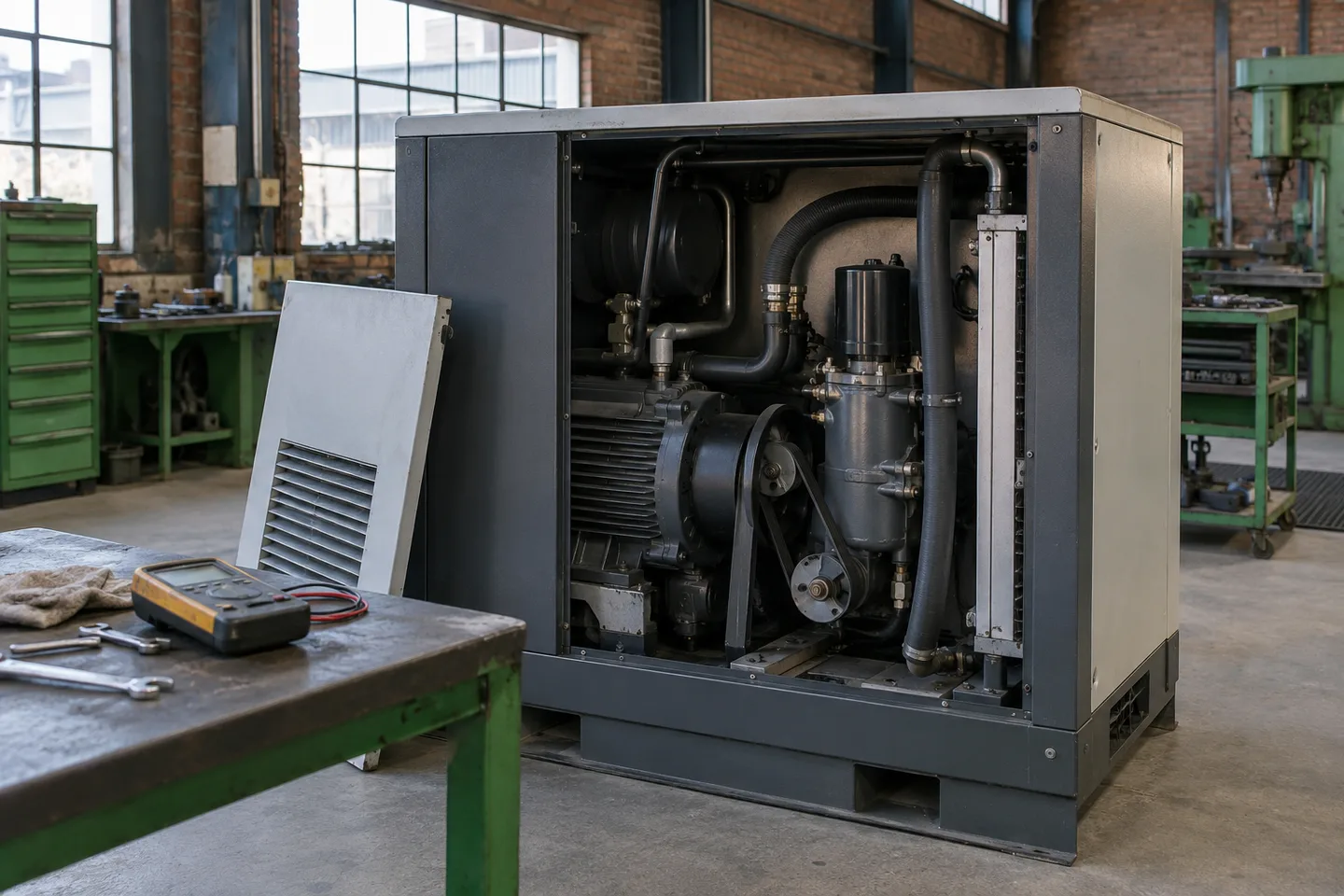
Fault investigation and repair scope
Repair work starts with investigating the reported fault and establishing the remedial work required. The scope may concern a compressor that has stopped, a recurring fault or a change in operation. Relevant service history and previous repairs help distinguish a new problem from one that has returned.
Describe the symptoms you’ve already observed, including the exact wording of any recorded fault message and when the problem first appeared. If the fault comes and goes, explain its known pattern without guessing the cause. Mention any recent servicing, repair work or other known change.
Details that clarify the repair requirement
Use existing observations and records to provide:
- The compressor make and model, if known.
- The symptoms and any recorded fault code.
- The date or approximate time the problem began.
- Whether the compressor is running or currently out of use.
- Previous occurrences and relevant service or repair history.
- The Glasgow site postcode and access arrangements.
Explain the effect on your operations
Describe what the affected compressor supplies and which activities have stopped or changed. If other equipment remains available, mention that as part of the situation. State your timing requirements clearly, including any planned closure or restriction on access.
Include any warranty, maintenance contract or previous repair arrangement that may be relevant. Mention records you hold without pasting confidential documents into the message. For an immediate safety concern, follow your established site procedures and use any existing emergency contact.
Send a compressor repair enquiry
Use the contact form to send Air Compressors Glasgow the observed fault, equipment details and business impact. Identify anything you don’t know so your repair requirements remain clear.